Nakano Tokyo Ramen Guide: 3 Bowls Worth the Trip
Hiro.SAO
The Japan Voyage
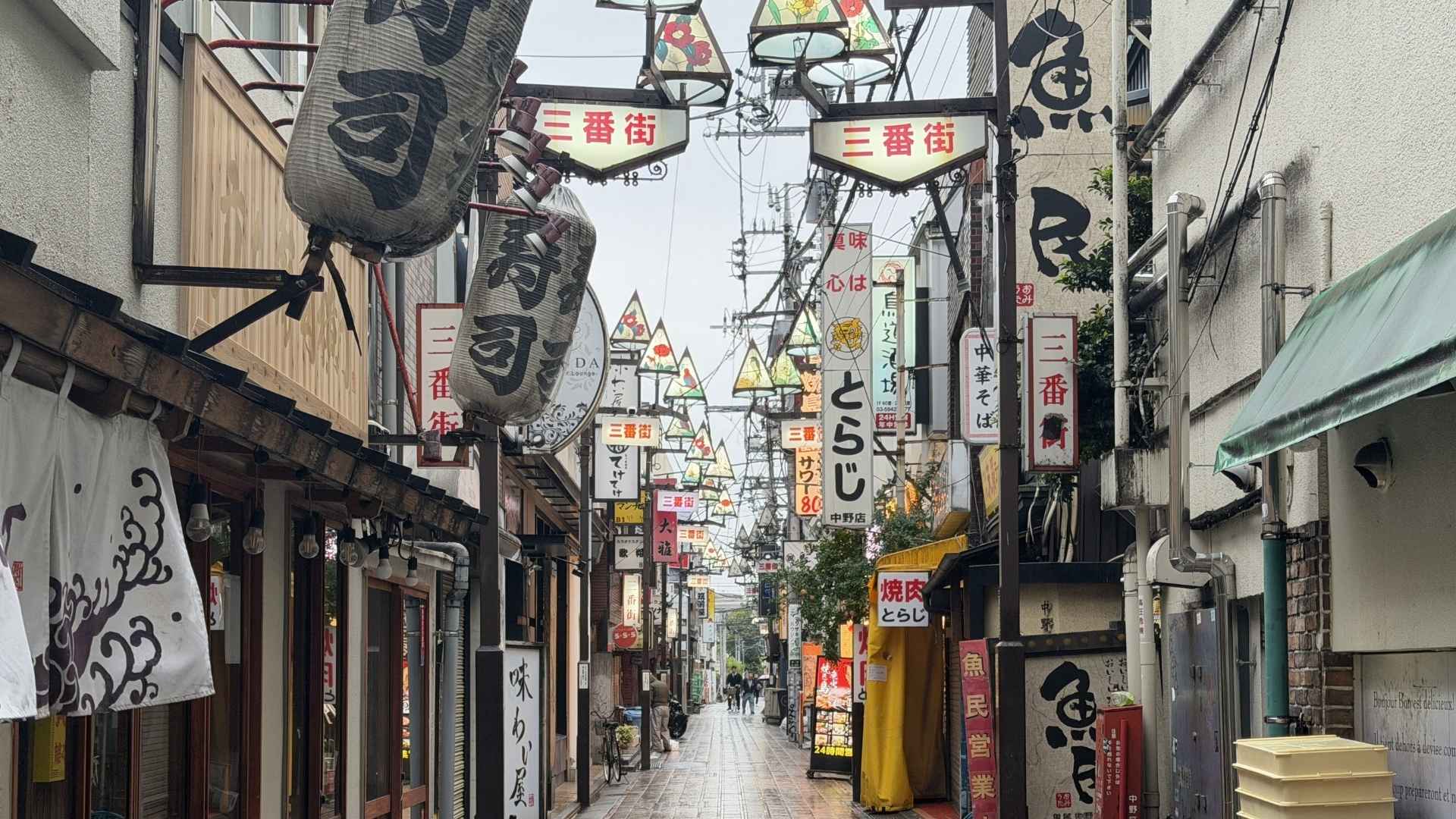
Tokyo rewards walkers strangely. Most famous districts work like islands: you surface from a station, circle the sights, and go back underground. Nakano is built along a line instead. From the north exit you can walk to a different railway entirely, about thirty minutes away, and spend nearly the whole distance inside shopping streets. This Nakano Tokyo walking guide follows that spine from JR Nakano Station to Araiyakushi-mae on the Seibu Shinjuku Line, past a covered arcade, the ground floor of a famous building, and a market street where the neighborhood actually buys its dinner.
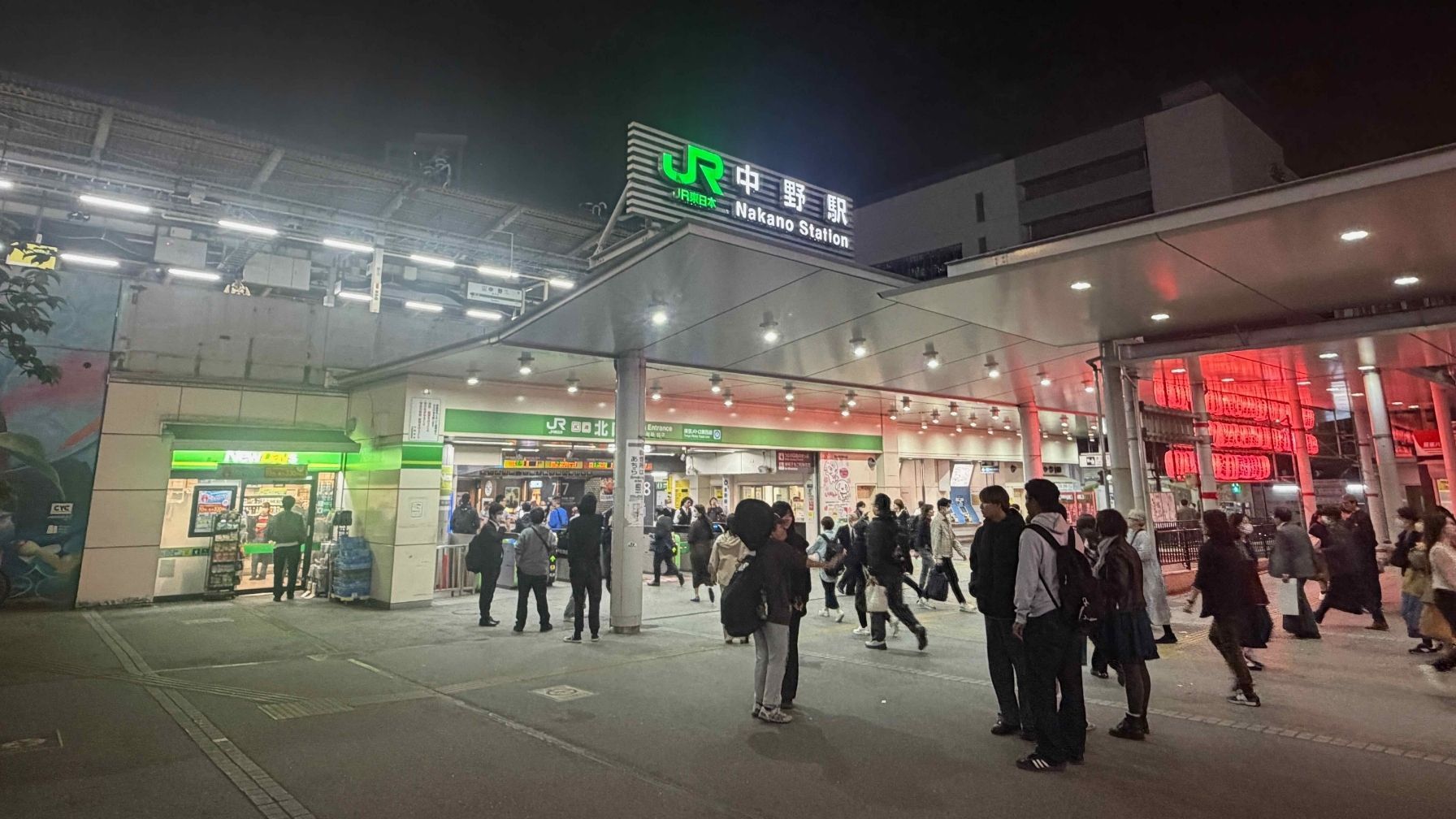
Nakano sits one stop from Shinjuku, about four minutes on the Chuo Line rapid. The route is close to one straight line: the Sun Mall arcade from the north exit, straight through Nakano Broadway at ground level, across Waseda-dori, then up the Yakushi Ai Road shopping street to the small temple that names it, with the Seibu line a few minutes beyond. Thirty minutes without stops. Only two joints might make you check a map, where Broadway spills onto open street and again just before the station, and both resolve into what is essentially one road.
| Segment | Time on foot | What it is |
|---|---|---|
| Sun Mall | About 5 min | Covered arcade from the north exit |
| Nakano Broadway, ground floor | About 5 min | Straight through the building |
| Yakushi Ai Road | About 10 min | Everyday shopping street |
| Araiyakushi temple grounds | About 10 min | Small local temple |
| To Araiyakushi-mae Station | A few min | Seibu Shinjuku Line |
One more thing before you set off. This route has a twin, and the twin has company. Nakano’s north side is not one shopping street but a dense cluster of them: the ward’s shopping-street federation lists fourteen separate associations around this single station exit, from Sun Mall and Broadway down to little numbered lanes.
The one to know is Ichibangai, one block east of Sun Mall, a Showa-era eating and drinking street that stays quiet by day and comes alive toward evening. The clean version of the day is to walk the arcade spine out to the temple in the afternoon, then give the evening to Ichibangai on the way back. Both halves are covered below.
Honesty first: nothing dramatic happens in Sun Mall. It is a covered arcade of everyday shops running about five minutes from the station to Broadway’s south entrance, and it does not build to anything. Sun Mall is not an attraction; it is the neighborhood’s main aisle, the roof under which Nakano does its errands. Notice what an ordinary Tokyo shopping arcade actually sells, and save your stopping power for later. If you are still deciding whether the area deserves your time at all, our honest answer is at Is Nakano Worth Visiting?
At the end of the arcade the route enters Nakano Broadway and does something that sounds like sacrilege: it walks the ground floor straight through, about five minutes, and comes out the other side. The building’s collector floors are a separate expedition, and the guideline hours only start at ten with the specialist shops filling in later, so a walker passing through mid-morning is not missing as much as it seems. Treat today as the survey and come back for the deep version.
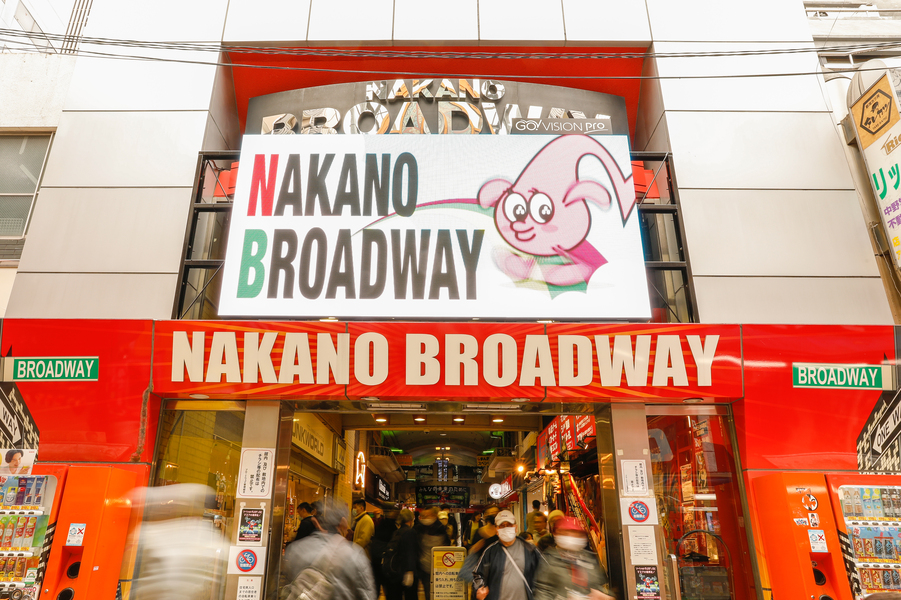
The north door of Broadway is where this walk quietly changes character. The arcade roof ends, the retail hum drops away, and you are standing in ordinary streets with a lived-in feel: low buildings, parked bicycles, laundry over shop signs. Nothing announces the transition. It is simply the point where the Nakano that sells things becomes the Nakano that lives here, and it is the reason this route exists.
Cross Waseda-dori and the shotengai resumes under a different logic. Yakushi Ai Road is a working shopping street for the people who live on it: a greengrocer with produce out front, a shop selling miso, a sento where the neighborhood still goes to bathe. None of it is arranged for visitors, which is exactly its value. You are seeing the infrastructure of daily Tokyo life doing its job at full seriousness.
Set your snacking expectations low. This is not a grazing street, and the food-stall alley you may be imagining does not exist here; a yakitori shop is about the extent of the street food. Come hungry for detail instead. The handwritten price signs, the pace of the shopkeepers, the bathhouse entrance between ordinary storefronts: these are the sights, and they cost nothing.
The street ends at its namesake. Araiyakushi, formally Shinzan Baishoin Yakuoji, is a small local temple, and ten unhurried minutes covers the grounds, with Kitano Shrine sitting directly behind it. It is not Sensoji and nobody here pretends otherwise. Two moments a year change the equation: spring, when the cherry trees are genuinely beautiful, and the year-end nights around New Year’s Eve, when the grounds fill with neighbors seeing the year out. On any other day, take it as a quiet full stop at the end of the walk.
A few more minutes of the same street brings you to Araiyakushi-mae Station on the Seibu Shinjuku Line, which runs back toward the Seibu Shinjuku terminal on the far side of Shinjuku. You arrived in Nakano on one railway and are leaving the area on another, having covered the whole distance between them on foot through shops. Few Tokyo neighborhoods let you do that.
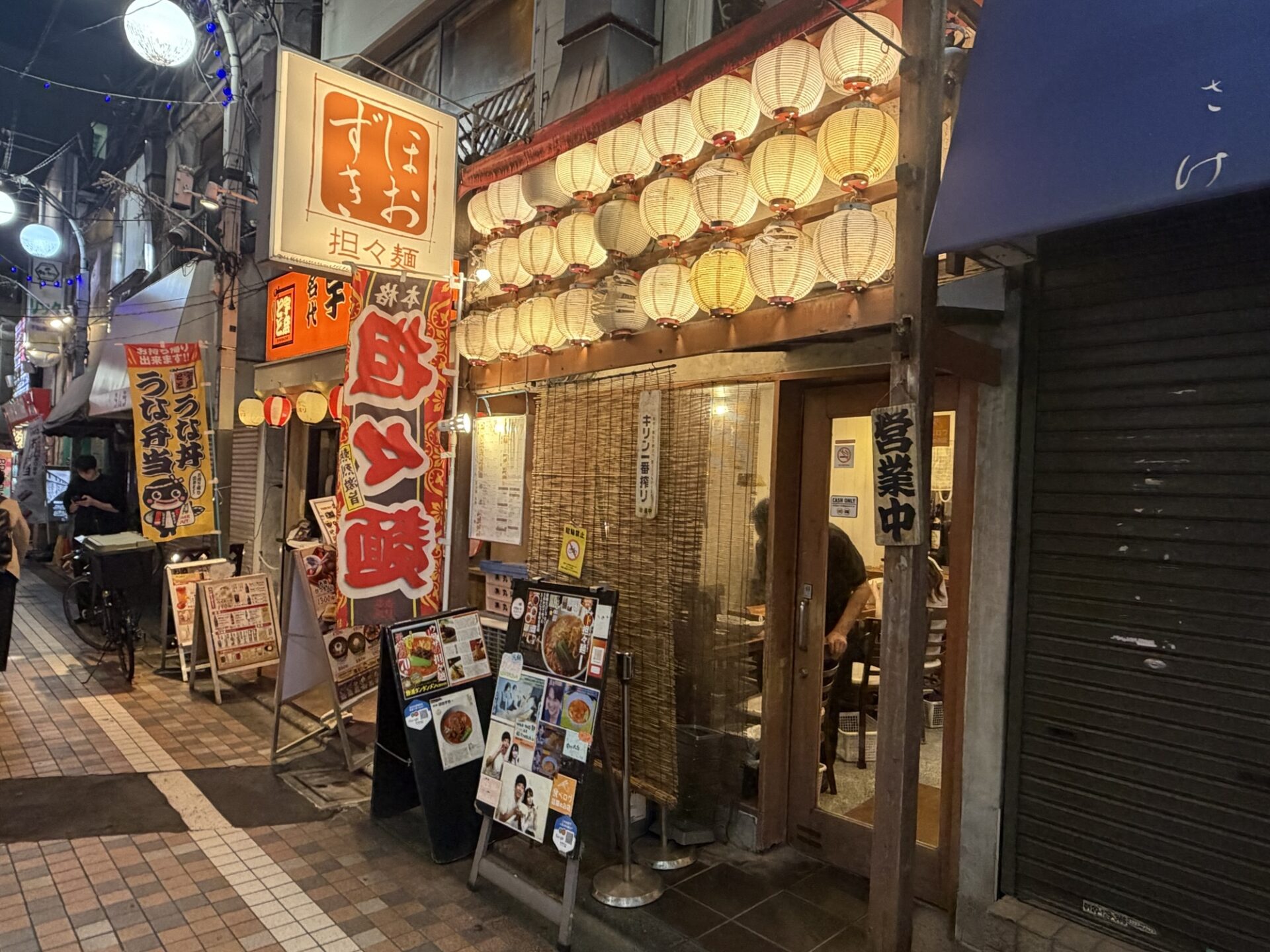
Now the twin. Nakano Kitaguchi Ichibangai starts about one minute from the north exit, one block east of Sun Mall, and it is a Showa-era food street: eating, drinking, and not much pretense. By day it mostly waits. From late afternoon the shutters start rising, and by night it is the livelier of the two spines. If you walk it end to end, it also feeds into the Yakushi Ai Road direction, so it works as a genuine alternative route rather than a detour.
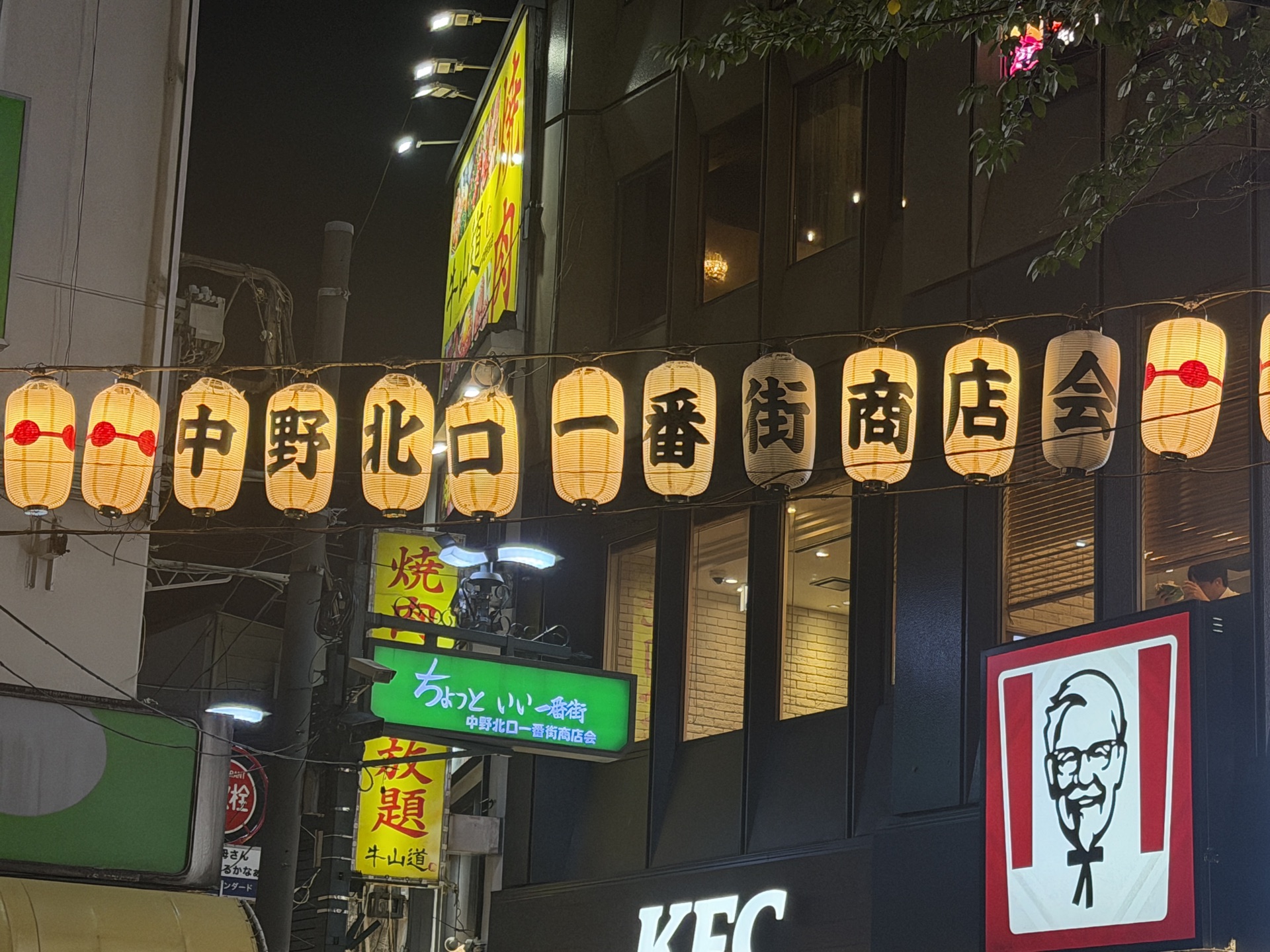
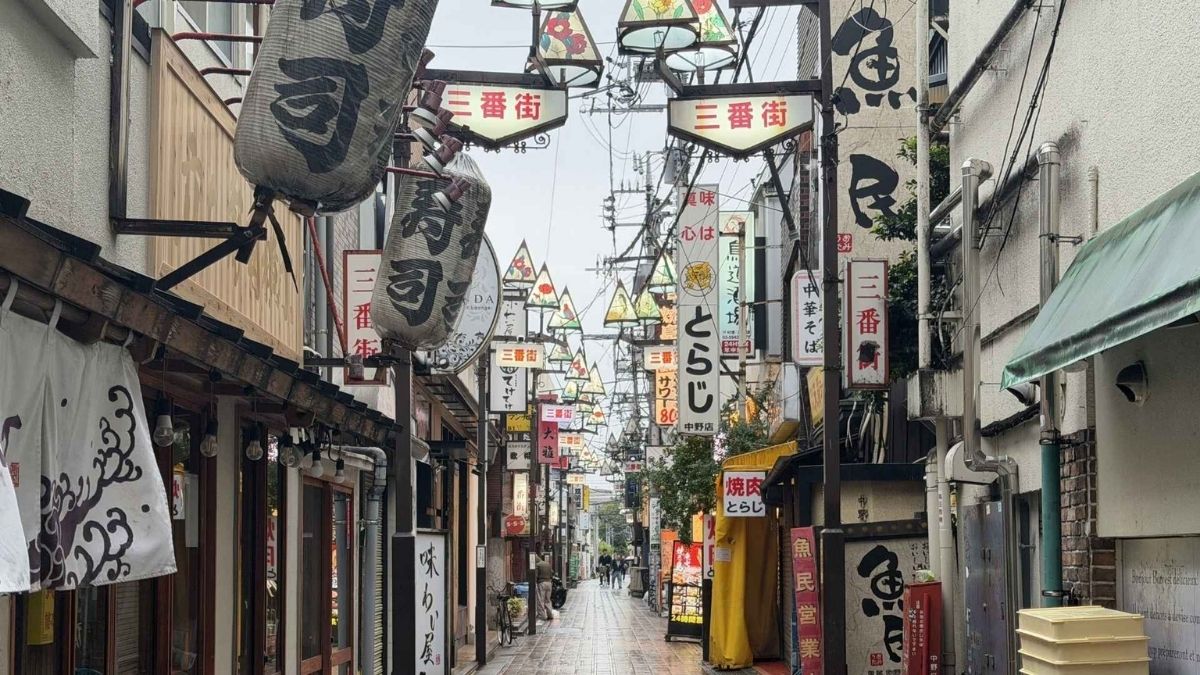
Ichibangai means First Street, and the name gives the neighborhood away: packed around it are streets registered as Nibangai, Sanbangai, Gobangai, Tanuki Koji and more, names that were numbered rather than branded. Officially they are all separate shopping associations; on the ground they blur into one dense district, and drifting off Ichibangai into a neighboring lane is not getting lost — it is the area working as intended.
A surprising share of the places this site has written about stand on or along this one street. Chuka Soba Aoba Honten for ramen. Dainichikara Shuzo, the sake izakaya pouring since 1962. Okajoki, the charcoal izakaya whose fish you can watch cooking over the fire, with details on its official site. LOU, the daytime cafe that anchors the street’s quiet hours. Camera hunters have their own reason to choose this side: Fujiya Camera, the used-camera dealer near Broadway, is the kind of shop people cross Tokyo for. The izakaya guide sorts the drinking options properly.
Timing decides what you get. In the morning almost everything is shuttered; the cafes such as LOU, open from eight, and the convenience stores are roughly what you will find awake. Some walkers genuinely like a shuttered arcade, all metal doors and echoes, and if that is you the early version has its own austerity.
Most people should start between ten and eleven, when the shops come up, or aim for late afternoon so the walk ends as Ichibangai lights. Fridays and Saturdays get crowded at midday and at night; midweek the streets belong to the neighborhood. For a full day built around these same hours, pair this Nakano Tokyo walking guide with the one-day itinerary.
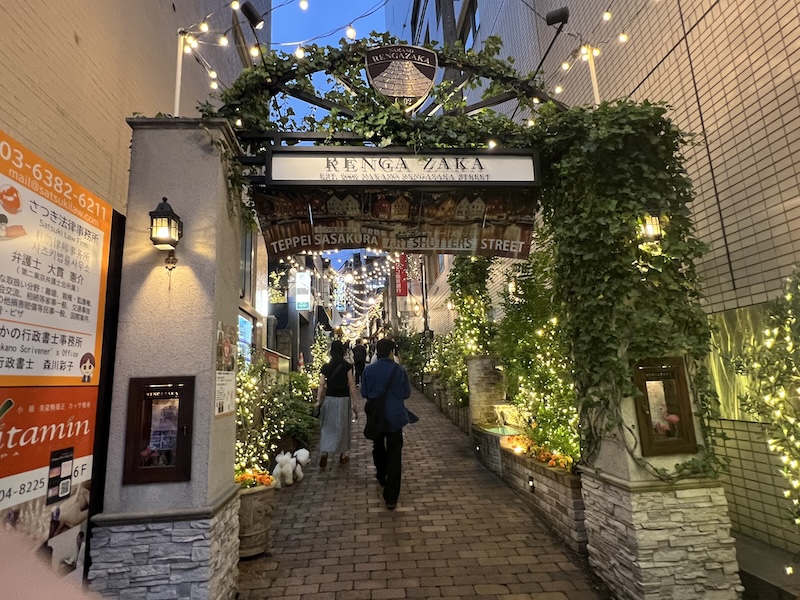
Deviations are easy if the mood takes you. Sanbangai, one of Ichibangai’s numbered neighbors, hangs lanterns over a lane of small eating places and photographs better than it has any right to. The streets west of the station carry their own scatter of shops and restaurants. On the south side, Rengazaka is a brick-paved slope of wine bars that feels like a different town, two minutes and one world away.
| Item | Detail |
|---|---|
| Start | JR Nakano Station, north exit |
| End | Araiyakushi-mae Station (Seibu Shinjuku Line) |
| Walking time | About 30 minutes without stops |
| Best hours | From 10:00–11:00, or late afternoon into evening |
| Crowds | Friday and Saturday midday and night are busiest |
| Evening route | Ichibangai, one block east of Sun Mall |
The case for this walk is the absence of a case. No single sight along it justifies a train ride, and every hundred meters is the real thing: an arcade doing errands, a building full of obsessions, a market street, a small temple, a food street waking for the night. That is what a Nakano Tokyo walking guide can promise that flashier districts cannot. Thirty minutes, two railways, and the most ordinary interesting road in western Tokyo.