Dainichikarashuzo: A Seafood Robatayaki That Earns Its Reputation, Two Minutes from Nakano Station
Hiro.SAO
The Japan Voyage
Saba — mackerel — is one of the most common fish in Japanese cuisine. It appears in bento boxes, convenience store onigiri, school canteens. Familiarity has a way of making things invisible, and for many people, mackerel has become background noise. Saba-Gin exists to correct that impression.
The restaurant is small — 26 seats, along the train line, two minutes from Nakano Station. The sign is visible from the platform. The interior is warm and unpretentious, the kind of place that feels right at the end of a working day, with an open kitchen that keeps the room smelling of charcoal and the sea.
The saba-zukushi — a mackerel tasting selection — is the right place to start. The fish comes directly from Kyushu, and the fat content shows. Four preparations arrive together: raw sashimi, lightly seared, shime-saba (vinegar-cured), and goma-saba (a Hakata speciality, dressed with sesame). Each version tastes meaningfully different from the others, which is the point — the selection is designed to demonstrate range, not simply to provide variety.
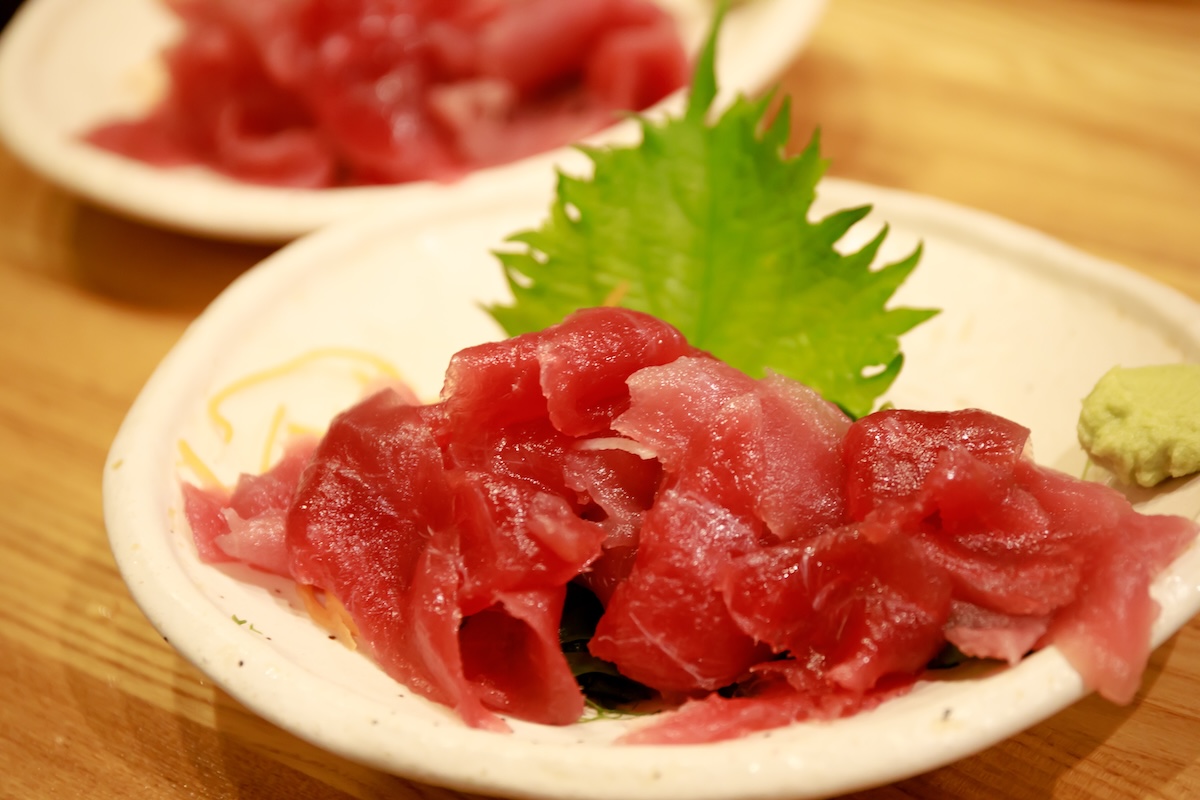
The raw sashimi is the most direct argument: clean, rich, nothing distracting it. The seared piece adds a layer of smokiness that changes the register entirely. The shime-saba — cured in vinegar — is firmer and brighter, a different fish in texture and flavour. The goma-saba is the most unfamiliar to visitors from outside Fukuoka, and worth trying on those grounds alone.
The sake list is chosen by someone who has thought carefully about what works with mackerel. Dry styles that cut through the fat; fuller options that hold up against the richer preparations. Ask for a recommendation — the staff know the menu well enough to be useful.
The shime-saba sando is the dish most tables order, and it earns the attention. Toasted bread, vinegar-cured mackerel, butter, and a small amount of wasabi — a combination that shouldn’t cohere as well as it does. The interplay between the bread’s warmth, the mackerel’s acidity, and the wasabi’s heat is precise. It’s also the kind of dish that makes you reconsider what mackerel is capable of.
The menu extends further: a German potato dish made with saba-shiokara (salted mackerel offal), and a saba chahan — mackerel fried rice — where the fish is distributed through the rice in a way that makes its presence felt without overwhelming. Both are worth ordering if the table has room.
Saba-Gin is the kind of restaurant that changes how you think about a single ingredient. The kitchen’s commitment to mackerel is genuine, and that focus produces results that a more general menu wouldn’t. For anyone who has written mackerel off as ordinary — this is the place to reconsider.
📮 Address
House Port Nakano 102, 5-32-9 Nakano, Nakano-ku, Tokyo
🚃 Access
2-minute walk from JR Nakano Station
☎️ Reservations
Accepted — 03-5942-9960
🕰️ Hours
Mon–Fri & eves before holidays: 16:00–midnight (food L.O. 22:30, drinks L.O. 23:00)
Sat, Sun & holidays: 13:00–midnight (food L.O. 22:30, drinks L.O. 23:00)
No regular closing days
🪑 Seating
26 seats
💳 Payment
Credit cards accepted (VISA, Mastercard, UnionPay)
IC / e-money not accepted — PayPay accepted
📶 Wi-Fi
Available
🚬 Smoking
Non-smoking indoors — terrace seating is smoking-permitted