Café Zingaro: Takashi Murakami's Kissaten Inside Nakano Broadway
Hiro.SAO
The Japan Voyage
Nakano Broadway is not hard to find. Walk north from the station, through the Sun Mall shopping arcade, and the building announces itself at the end of the covered street. What’s less obvious, until you’re inside it, is what the building actually contains — and how long it takes to understand.
Opened in 1966 as a mixed residential and commercial complex, Broadway occupies an unusual category. The lower floors run like a normal neighbourhood shopping arcade: groceries, clothing, a fortune teller. Take the escalator to the second or third floor, and the building becomes something else entirely.
The upper floors of Nakano Broadway feel like a cross-section of Japanese popular culture across several decades — laid out horizontally, in glass cases, along narrow corridors that branch and double back. Vintage figures, out-of-print manga, animation cels, idol merchandise, tin toys: the range is wide enough that a single visit tends to produce a specific feeling, somewhere between overwhelm and fascination.
The smell of old paper is present throughout. So is the particular quiet of a place where people are concentrating. Broadway rewards patience and a willingness to move slowly.
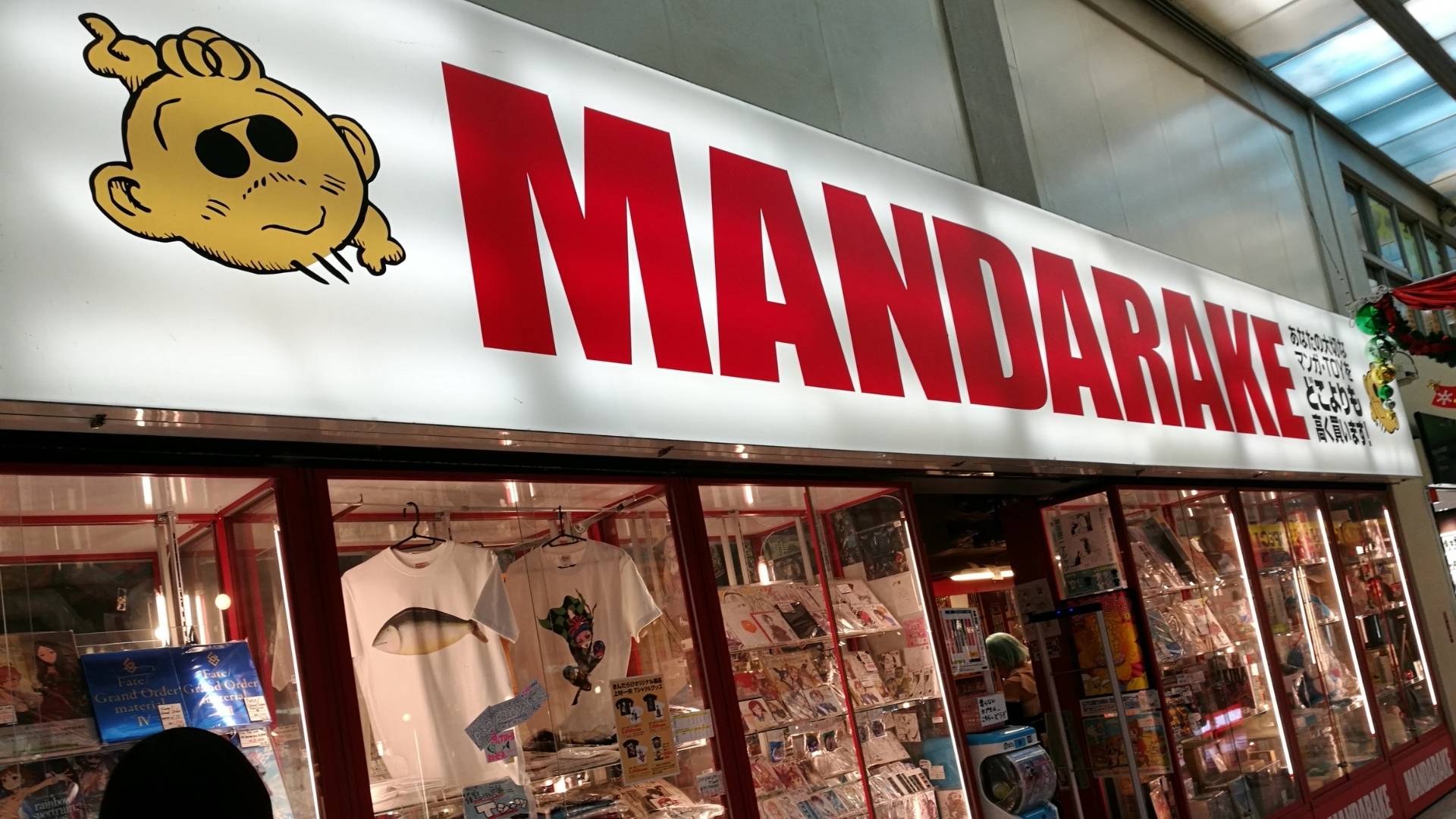
Mandarake began in Nakano Broadway in 1980, and the building is still where it makes the most sense. The name is associated primarily with used manga and anime goods, but that description undersells the operation considerably. Mandarake functions as a cultural archive — collecting, appraising, preserving, and recirculating material across manga, animation, games, and related fields. The individual shops within Broadway are each focused on a specific category, and together they form something closer to a specialist institution than a chain of retail stores.
A single day is not enough to see all of it. Most people develop a route based on their own areas of interest, and return.
Honten (Main Store) — Manga
The starting point for most visitors. The range extends from out-of-print kashihon manga (the lending-library comics of postwar Japan) through signed editions to current releases. Finding a specific title is possible; finding something you’d forgotten existed is more likely. The walls are fully covered.
Hen-ya — Vintage Objects
Tin toys, corporate novelty items, vinyl figures from the Showa period. The objects here share a particular quality: they were designed with a warmth and strangeness that contemporary product design rarely attempts. Each one carries the aesthetic logic of its era in a way that makes it interesting to look at regardless of whether it connects to anything in your own history.
Anime-kan — Animation Cels and Original Artwork
Individual frames from animated productions — the physical cells that were photographed to create the moving image — alongside original drawings and production materials. These are documents of process as much as objects of value. Owning a cel means owning a specific moment from a specific production: a particular kind of relationship to animation as a medium.
Special-kan — Figures and Collectibles
Detailed figures displayed under controlled lighting in glass cases. The craftsmanship in this category is worth examining closely, independently of any attachment to the characters depicted. The level of detail in high-end figure production is a form of expertise that doesn’t often get acknowledged as such.
Mandarake attracts visitors for reasons that aren’t straightforwardly about nostalgia. The objects here carry the energy of the people who made them and the people who cared about them — creators, collectors, fans across multiple generations. That accumulated attention is detectable in the space.
The glass cases contain things that have already had lives. They’ll have more. Mandarake operates as a point of transfer — between past owners and future ones, between the moment something was made and the moment someone decides it matters to them. That’s a different proposition from ordinary retail, and it accounts for the particular atmosphere the building generates.
Broadway is worth a full afternoon. Come without a specific agenda if possible, or with a very specific one. Both approaches work. What doesn’t work is moving quickly.